Your First Week with Clear Aligners: What to Expect
Pressure, speech changes and new habits: what your first week with clear aligners usually feels like, and simple tips to settle in quickly.
Disclosure: Aligners.com.pk is affiliated with ClearPath Orthodontics, maker of ClearPath Aligners. How we work.
Starting clear aligner treatment is exciting, but the first few days can feel a little strange. Your teeth are starting to move, your mouth is getting used to something new, and you are building fresh daily habits.
Most people settle in within a week. Here is what the first week usually looks like, and simple ways to make it easier. Experiences vary, so always follow the instructions from your own dentist or orthodontist.
Day 1: fitting your first aligners
On your first visit your provider will usually check the fit of your first set, show you how to put the trays in and take them out, and explain how long to wear each set. Some treatment plans also include small tooth-coloured attachments bonded to certain teeth, which help the aligners grip and move them.
Before you leave, make sure you know:
- how many hours a day to wear your aligners
- when to switch to the next set
- how to clean them
- when your next check-up is
Days 1 to 3: pressure and tightness
It is very common to feel pressure or mild soreness in the first two or three days. This is a sign the aligners are working, gently pushing your teeth towards their planned positions. The feeling usually fades as your teeth adjust, and returns briefly each time you start a new set.
Things that can help:
- Put new aligners in at night, so you sleep through the tightest hours.
- Eat softer foods for the first day or two, such as daal, khichdi, yoghurt and soups.
- Keep wearing the aligners. Taking them out for long periods to avoid the pressure can slow your treatment.
- Ask your provider about pain relief if you need it.
Speech: a slight lisp at first
Many people notice a slight lisp or a change in how they say certain sounds in the first few days. Your tongue simply needs time to get used to the thin layer of plastic over your teeth.
To speed this up, talk, read aloud and sing as much as you can. Most people find their speech is back to normal within a few days.
Taking aligners in and out
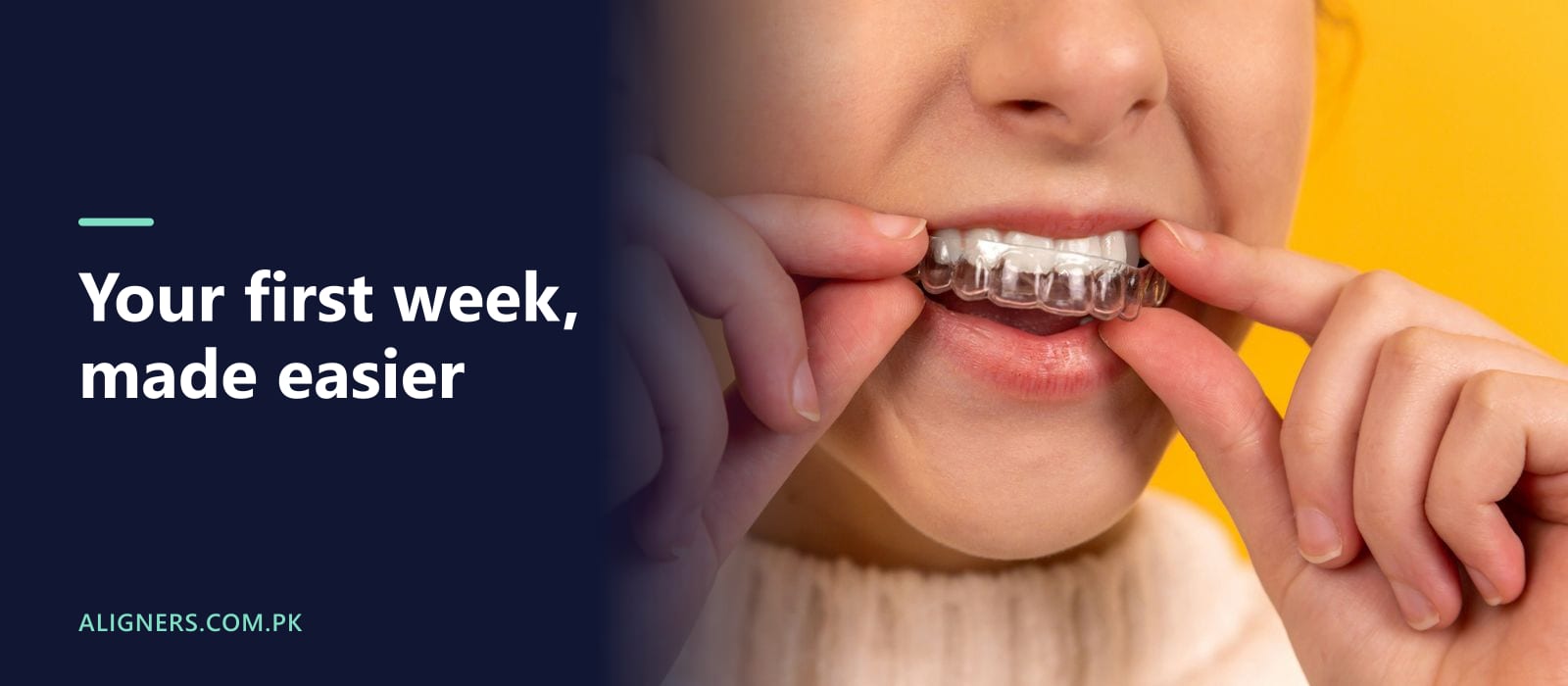
Removing aligners can feel awkward at first, and the trays may feel very tight. Your provider will show you the best way, which usually means starting at the back teeth and gently working forwards on both sides. Avoid using sharp objects. It gets much easier after a few days of practice.
Building your daily routine
Clear aligners only move teeth while you are wearing them. Aligners are commonly worn for around 20 to 22 hours a day, so the first week is the time to build habits that make this easy:
- Take aligners out only to eat, drink anything other than water, and clean your teeth.
- Brush or rinse before putting them back in. Our guide on how to clean clear aligners has a simple routine.
- Always use your case. Wrapping aligners in a napkin is the quickest way to lose them.
- Set reminders on your phone for meals, so the trays do not stay out for too long.
- Read our tips on eating and drinking with clear aligners.
Small irritations and how to handle them
The edges of new aligners can sometimes rub your cheeks, lips or tongue. If an edge feels sharp, contact your provider, who may be able to smooth it. Dry mouth is also common at first, so drink plenty of water throughout the day.
When to contact your provider
Get in touch with your dentist or orthodontist if:
- the pain is severe or does not improve after a few days
- an aligner cracks, breaks or no longer fits
- an attachment comes off
- you lose an aligner
The NHS overview of orthodontic treatment is also a useful background read on how teeth are moved safely.
By the end of week one
By the end of the first week, most people find their aligners feel comfortable, their speech is back to normal and their new routine is starting to feel automatic. From here, treatment becomes part of everyday life, with a new set every week or two and regular check-ins with your provider.
Still deciding whether aligners are right for you? Compare the options in our guide to aligners vs braces, or see whether aligners can help with crooked teeth or gaps between teeth. Wondering about the small bumps some providers add to teeth? Read clear aligner attachments explained. Once treatment is under way, read what to expect at clear aligner check-ups and why some people need extra trays in clear aligner refinements explained.
If your speech feels different at first, our guide to speaking with clear aligners has simple practice tips, and if you are curious about bite concerns, read about overbite and clear aligners.


