Teeth Moved After Braces? How Clear Aligners Can Help
Teeth shifting years after braces is common. Learn why orthodontic relapse happens, how retainers fit in and when clear aligners may be an option.
Disclosure: Aligners.com.pk is affiliated with ClearPath Orthodontics, maker of ClearPath Aligners. How we work.
You wore braces as a teenager. Maybe it was during school in Rawalpindi or college in Multan. You put up with the wires, the tight appointments and the food restrictions. Then, years later, you look in the mirror and notice that a front tooth has turned slightly, or a gap you thought was gone is starting to come back.
If this sounds familiar, you are not alone. Teeth moving after orthodontic treatment is very common. Dentists call it orthodontic relapse. The good news is that, in many cases, it can be corrected, and clear aligners are one of the options a dentist or orthodontist may consider.
This article explains why teeth move after braces, what role retainers play, when aligners might help and why an assessment comes first.
Why do teeth move after braces?
Teeth are not fixed in place like pegs in wood. They sit in bone and are held by tiny fibres called ligaments. These fibres let teeth move slightly under pressure. That is exactly why orthodontic treatment works, and it is also why teeth can move again afterwards.
Several things commonly contribute to relapse:
- Memory in the gum fibres. Some of the fibres around the teeth, especially those that resist rotation, can pull teeth back towards where they started.
- Natural ageing. Teeth tend to drift slowly throughout life, even in people who never had braces. Lower front teeth often become more crowded with age.
- Not wearing retainers. This is one of the most common reasons. Retainers are what hold teeth in their new positions.
- Habits. Tongue thrusting, nail biting, pen chewing or pushing on teeth can nudge them over time.
- Gum and bone changes. If gum health declines, teeth may lose some support and shift.
- Tooth loss or new dental work. A missing tooth nearby can let others drift into the space.
Relapse is rarely anyone's fault alone. It is a normal biological tendency that retainers are designed to manage.
Your retainer history matters
When you see a dentist about shifting teeth, one of the first things they may ask is about your retainer. It helps to think about your answers before your visit:
- Did you get a retainer after your braces came off?
- Was it removable, or a thin wire bonded behind your teeth?
- How long did you wear it, and how many hours a day?
- Does it still fit, or has it broken, been lost or been left in a drawer?
- If you had a fixed wire, is it still fully attached?
Many people stopped wearing their removable retainer after a year or two, often after moving to a new city for university or work and losing track of it. Others had a bonded wire that came loose at one end without them noticing. Both situations can allow teeth to move.
If you still have an old retainer, do not force it back in if it feels very tight. Bring it with you and let your dentist check it.
When can clear aligners help?
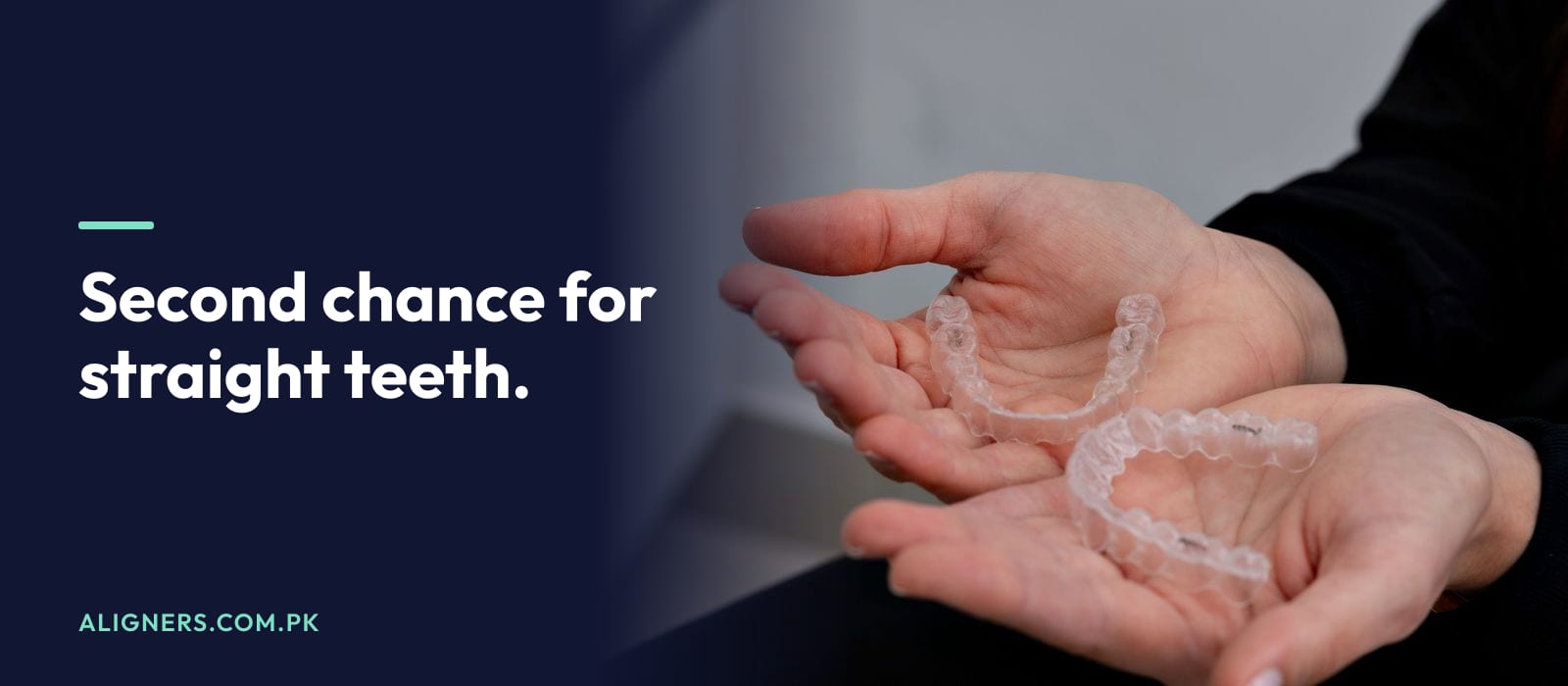
Clear aligners are removable trays that move teeth in small steps. For many adults whose teeth have shifted after braces, the movements needed are relatively small: a rotated front tooth, mild crowding in the lower front teeth, or a small gap reopening. These kinds of movements are commonly well suited to aligners, though only an assessment can confirm this for you.
Aligners may be considered when:
- The relapse is mild to moderate
- The teeth and gums are healthy
- The bite has not changed significantly
- You can commit to wearing trays for most of the day
Many adults who had braces before also like that aligners are less visible and can be taken out for meals and special events. If you are weighing your options, our comparison of aligners vs braces explains the differences. For adults in particular, see clear aligners for adults.
When other options may be better
Aligners are not right for every case. If the relapse is severe, if your bite has shifted a lot, or if there are complications such as missing teeth, root problems or gum disease, your provider may suggest a different approach. In some cases, fixed braces again may be advised. In others, simply fitting a new retainer might be enough to stop further movement if the change is very small and you are happy with how your teeth look.
The aim is not to choose aligners no matter what, but to choose what suits your teeth and keeps them healthy.
What happens at the assessment?
Before anyone moves your teeth again, a qualified dentist or orthodontist should examine you in person. An assessment commonly includes:
- A look at your teeth, bite and gums
- Questions about your past treatment and retainer use
- X-rays where needed, to check roots and bone
- Photos and a digital scan or moulds of your teeth
Teeth that have already been through orthodontic treatment sometimes have shorter roots or other changes that a provider will want to know about before planning further movement. This is why X-rays may be important in relapse cases.
If you can, bring any records from your earlier treatment: old photos, the name of your previous orthodontist or even a rough idea of when your braces came off. This history can help your new provider plan. If you are not sure what to ask, read our list of questions to ask before clear aligner treatment.
A digital scan is often part of planning aligners. Our post on digital teeth scans explained describes what it involves.
What treatment might look like
Every plan is different, but correcting relapse with aligners often involves:
- Health check first. Any decay or gum problems are usually treated before tooth movement.
- A digital plan. Your provider designs a set of trays to move the teeth back into line.
- Attachments, if needed. Small tooth-coloured bumps may help aligners grip certain teeth.
- Wearing trays as advised. Usually for most of the day, changing to new trays on a schedule.
- Check-ups. Your provider monitors whether teeth are moving as planned.
- Retainers at the end. This time, with a clear plan for long-term wear.
Treatment for mild relapse is sometimes shorter than the original braces treatment, but this depends entirely on your case. Your provider will advise on the expected timeline.
Protecting your result this time
If you do go through treatment again, the most important lesson is retention. Many providers now advise wearing retainers at night for the long term, sometimes indefinitely. Ask your provider:
- What type of retainer suits me?
- How long should I wear it each night?
- What should I do if it cracks or stops fitting?
Our post on retainers after clear aligners explains the main types and how to look after them.
A few everyday habits also help. Keep your retainer in its case, not wrapped in a tissue where it can be thrown away. Pack it whenever you travel for a wedding or a family visit. And if a fixed wire feels loose, see your dentist quickly rather than waiting.
The bottom line
Teeth moving after braces is common and usually happens slowly over years. It is not a sign that your first treatment was wasted. For many people with mild relapse, clear aligners can be a discreet way to bring teeth back into line, but only a qualified dentist or orthodontist can tell whether they are right for you. An honest assessment, a careful plan and a good retainer routine give you the best chance of a lasting result.
For more general information on orthodontic care, the American Dental Association's MouthHealthy page on orthodontics is a helpful resource. You can also read our guide to crooked teeth treatment.


